Table of Contents
1. The Pre-Clean Phase – Gearing Up for Success
2. The Main Event – Draining and Shell Sanitation
3. Deep Dive into Component Care
4. The Final Phase – Refilling and Rebalancing for Perfection
Welcome to the ultimate guide for maintaining your personal oasis! Owning an outdoor spa is a ticket to daily relaxation and rejuvenation. But to keep that pristine, inviting water and powerful jet performance, a little monthly TLC is essential. Going beyond the daily chemical checks, a dedicated monthly deep clean is the secret to a healthier, longer-lasting, and more enjoyable hot tub experience.
Many owners think skimming leaves and adding sanitizer is enough. However, over time, unseen oils, lotions, organic matter, and minerals build up in your plumbing, on the shell surface, and within core components. This guide will walk you through a comprehensive, step-by-step monthly procedure for a thorough shell and component deep clean. Think of it as a spa day for your spa.
Why a Monthly Deep Clean is Non-Negotiable
Regular water testing and sanitizing are the daily sprints of hot tub care, but the monthly deep clean is the marathon that ensures long-term health and performance. Most experts agree that a deeper clean should be performed at least monthly, or even more frequently depending on how often you use your outdoor tub .
Here’s why you can’t afford to skip it:
l Health and Hygiene: Body oils, lotions, cosmetics, and sweat combine with bacteria to create a stubborn, slimy layer called biofilm inside your spa’s plumbing . This is invisible from the outside but can harbor bacteria. A monthly plumbing purge is the only way to effectively remove it.
l Equipment Longevity: Mineral deposits, particularly calcium, can clog your jets, reducing their pressure and effectiveness. Scale can also build up on your heater element and pump components, forcing them to work harder and shortening their lifespan .
l Water Clarity and Feel: A deep clean removes the dissolved solids and organic contaminants that cause cloudy water, unpleasant odors, and skin irritation. It resets your water’s foundation, making it easier to balance and maintain.
l Protecting Your Investment: The acrylic shell of your hot tub is durable, but it’s not invincible. Neglecting it can lead to stubborn stains and surface damage. Regular, proper cleaning protects its finish and preserves the value of your spa .
By dedicating a few hours each month to this process, you ensure every soak is as clean, safe, and enjoyable as the first.
The Pre-Clean Phase – Gearing Up for Success
Before you dive in, preparation is key. Having the right tools on hand will make the process smoother, safer, and more effective.
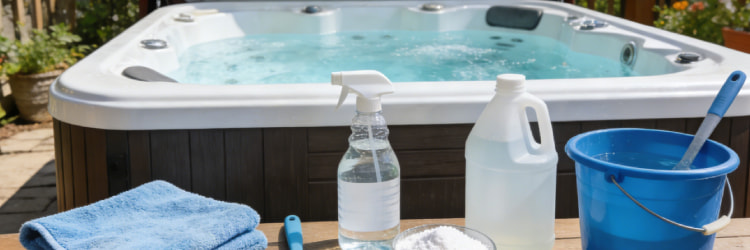
Assembling Your Eco-Friendly Cleaning Toolkit
You don’t need a cabinet full of harsh chemicals to get a brilliant clean. Many of the most effective cleaning agents are gentle, affordable, and better for the environment. Here’s what you’ll need:
l Soft, Non-Abrasive Cloths: Microfiber cloths are perfect for cleaning the acrylic shell without scratching it .
l Gentle Scrub Brush: A soft-bristle brush for tackling any stubborn spots. Avoid steel wool or abrasive scouring pads at all costs .
l Garden Hose with a Spray Nozzle: Essential for rinsing and refilling.
l Sump Pump (Optional but Recommended): While your hot tub has a built-in drain, a submersible sump pump can empty it much faster.
l Filter Cleaning Tool: A hose attachment designed to spray between the pleats of your filter cartridge.
l A Clean Bucket: For mixing cleaning solutions and soaking components.
For Your Eco-Friendly Cleaning Solutions:
l System Flush Product: A specialized product designed to clean biofilm from your spa’s internal plumbing.
l White Vinegar: A fantastic natural descaler. A simple 50/50 solution of white vinegar and water is a secret weapon against mineral buildup and soap scum on jets and the shell .
l Baking Soda: A mild abrasive that’s great for creating a paste to lift tougher stains without scratching the acrylic surface .
l Specialized Filter Cleaner: A solution formulated to break down the oils and organic material trapped deep within your filter pleats.
The Crucial First Step: Purging Your Plumbing
This is the most important step and it must be done before you drain the water. The goal is to flush out all the accumulated gunk from the pipes you can't see.
1.Remove Accessories: Take out any pillows, floating dispensers, or toys from the water. It’s also a good idea to remove your filter cartridges during the flush, as the process will dislodge debris you don’t want getting trapped in the pleats .
2.Add the Flushing Agent: Pour the recommended amount of your system flush product directly into the existing hot tub water.
3.Circulate and Activate: Turn on your jets and let the pumps run for the time specified by the product instructions—typically anywhere from 20 minutes to several hours. For a truly deep clean, it's best to run all the pumps and open all the air control valves to ensure the cleaning solution reaches every inch of your plumbing .
4.Don't Be Alarmed! You will likely see unpleasant foam, discoloration, or flecks appear on the water's surface. This is a good sign! It means the product is working, breaking down and expelling the biofilm from your pipes.
Once the flush cycle is complete, you are ready to drain the dirty water and move on to the main event.
The Main Event – Draining and Shell Sanitation
With the internal plumbing now purged, it's time to focus on the visible surfaces.
The Safe Draining Procedure
1.Power Down: The most critical safety step is to completely disconnect your hot tub from its power source. Turn it off at the main breaker . Never drain a spa while it is still powered on, as this can severely damage the pump and heater.
2.Drain the Water: Connect your garden hose to the spa’s drain valve and run the other end to a suitable drainage area. If using a sump pump, place it in the deepest part of the footwell.
3.Water Conservation Tip: The water you drain is rich in chemicals, so avoid draining it into storm drains or natural bodies of water. However, if you stop adding sanitizer (like chlorine or bromine) for a few days before your deep clean and test the water to ensure levels are near zero, you can often repurpose the water for your lawn or non-edible plants . This is a fantastic way to conserve water as part of your eco-friendly routine .
4.Remove Residual Water: Once drained, use a wet/dry vac or sponges to remove any remaining puddles from the seats and footwell.
Mastering the Art of Shell Cleaning
Now that your outdoor spa shell is empty and exposed, it’s time to make it shine. The key here is to be gentle. Your spa's acrylic shell has a protective layer that can be damaged by harsh chemicals or abrasive tools .
Step-by-Step Shell Cleaning Table
Step | Action | Description & Eco-Friendly Tips |
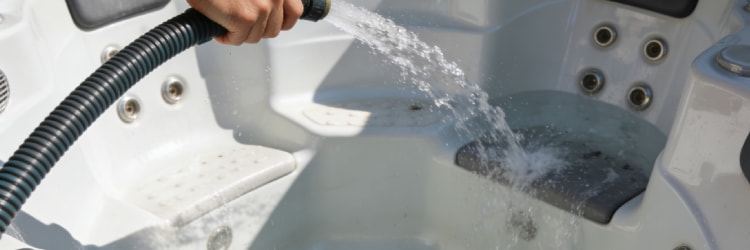
1. Initial Rinse | Use your garden hose to give the entire interior shell a thorough rinse. | This will wash away any loose debris and the last of the old, treated water. |
2. Apply Cleaner | Spray the shell with your chosen cleaning solution. | Eco-Friendly Choice: A 50/50 mixture of white vinegar and water in a spray bottle works wonders on most waterline scum and mineral deposits . It's a safe and effective cleaner for acrylic surfaces. Avoid household cleaners containing ammonia, bleach, or abrasive particles . |
3. Let It Sit | Allow the cleaning solution to sit for 5-10 minutes. | This gives the cleaner time to break down oils and grime, reducing the amount of scrubbing you need to do. |
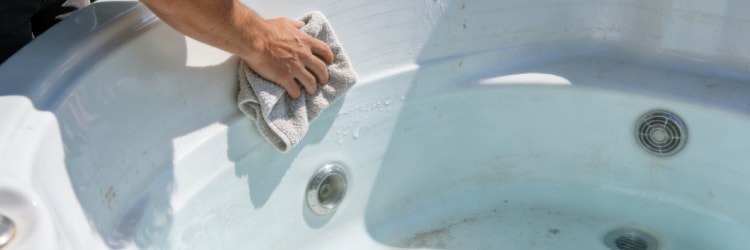
4. Gentle Scrub | Use a soft microfiber cloth or non-abrasive sponge to wipe down all surfaces, starting from the top and working your way down . | For stubborn stains, create a paste of baking soda and water, apply it to the spot, let it sit for a few minutes, and then gently scrub with your cloth . |
5. Thorough Rinse | Rinse the entire shell meticulously with your hose. | This step is crucial. Any leftover cleaning residue will cause foam and throw off your water chemistry when you refill the tub . Rinse until you are certain all cleaning agents have been washed down the drain. |
6. Dry the Shell | Use a clean, dry microfiber towel to wipe the shell dry. | This prevents water spots and gives you a final chance to inspect the surface for any missed spots or potential issues. |
With the shell sparkling, it’s time to give that same level of attention to the hardworking components of your hot tub.
Revitalizing Your Filters: The Heart of Your Spa
Your filters are your spa’s primary defense against debris. A simple rinse is fine for weekly maintenance, but a monthly deep clean is essential to remove the oils and lotions that clog the filter’s pores and reduce its efficiency .
1.Remove and Rinse: Carefully take out the filter cartridges. Using your hose or a filter cleaning tool, thoroughly rinse them from top to bottom, making sure to get between each pleat to remove all visible debris.
2.Chemical Soak: Place the rinsed filters in a clean bucket and submerge them in a filter cleaning solution, following the manufacturer's directions. This chemical soak is what breaks down the invisible oils, lotions, and organic matter that a simple rinse can’t remove .
3.Final Rinse: After the soak (usually several hours or overnight), remove the filters and give them one last, exhaustive rinse until the water runs completely clear and free of suds.
4.Let Them Dry: If possible, allow the filters to dry completely before reinstalling them. This helps kill any remaining microorganisms and improves the filter’s efficiency. Many owners keep a second set of filters on hand to swap in immediately, allowing the first set to dry thoroughly.
Restoring Your Jets to Full Power
Over time, mineral deposits can build up inside your spa jets, causing them to stick, spin poorly, or lose pressure. A monthly inspection and cleaning can keep them performing like new.
1.Inspect and Remove: Check each jet to ensure it rotates freely. Many hot tub jets are designed to be removed for cleaning. They typically unscrew with a counter-clockwise turn . Consult your owner’s manual if you are unsure.
2.Vinegar Soak: Place all the removable jet faces into a bucket filled with a 50/50 solution of white vinegar and warm water . Let them soak for a few hours. This will dissolve the calcium and mineral buildup that causes them to stick.
3.Scrub and Rinse: After soaking, use a small, soft brush (an old toothbrush works well) to scrub any remaining deposits from the jets . Rinse them thoroughly with fresh water.
4.Clean the Jet Housings: While the jet faces are soaking, use your soft cloth to wipe around the inside of the jet housings still in the spa wall.
5.Reinstall: Once clean and rinsed, pop the jet faces back into their housings, ensuring they click or screw securely into place .
Inspecting Pumps, Heaters, and Suction Fittings
While the internal workings of your pumps and heater were cleaned during the plumbing purge, this is the perfect time for a visual inspection.
l Pump & Equipment Area: Open the equipment compartment door. Look for any signs of leaks, drips, or corrosion around the pumps, heater, and plumbing unions. Check for any rodent nests or debris that may have accumulated.
l Suction Fittings: Inside the tub, locate the suction fittings (usually in the footwell). Ensure the covers are clean, free of debris, and securely in place. Clogged suction fittings can starve the pump of water, causing serious damage .
The Final Phase – Refilling and Rebalancing for Perfection
The hard work is done! Now it's time to bring your pristine outdoor spa back to life.
1.Close the Drain: Ensure the main drain valve is tightly closed.
2.Reinstall Components: Place your clean, dry filters and any cleaned jet faces back into the spa.
3.Begin Refilling: Place your garden hose into the filter housing/compartment to begin filling the tub . Filling through this area helps prevent air locks in the plumbing, which can stop your pumps from priming correctly on startup.
4.Fill to Level: Fill the water to the recommended level, typically halfway up the highest jets or as indicated by your manufacturer.
5.Power Up: Once full, it’s time to restore power at the breaker. Your hot tub should enter its start-up or priming mode.
6.Test and Balance: This is perhaps the most important final step. Your fresh water is a "blank slate." Use your test strips or test kit to check the Total Alkalinity (TA), pH, and Calcium Hardness. Adjust these levels in that order before adding any sanitizer like chlorine or bromine . Properly balanced water is essential for your sanitizer to work effectively and for protecting your spa's components.
7.Heat It Up: Once the water is balanced, set your desired temperature, place your cover on to conserve heat and energy, and let it warm up .
Your Monthly Ritual for Lasting Outdoor Tub Bliss
Congratulations! You’ve just completed a full, professional-level deep clean of your hot tub. By incorporating this comprehensive monthly routine—from purging the plumbing to sanitizing the shell and detailing the components—you are doing more than just cleaning. You are actively investing in your health, protecting your equipment, and ensuring every single soak is a crystal clear, relaxing, and worry-free escape.
Make this your monthly ritual. The few hours it takes will pay you back with countless hours of pristine, trouble-free enjoyment in your personal outdoor spa. Happy soaking