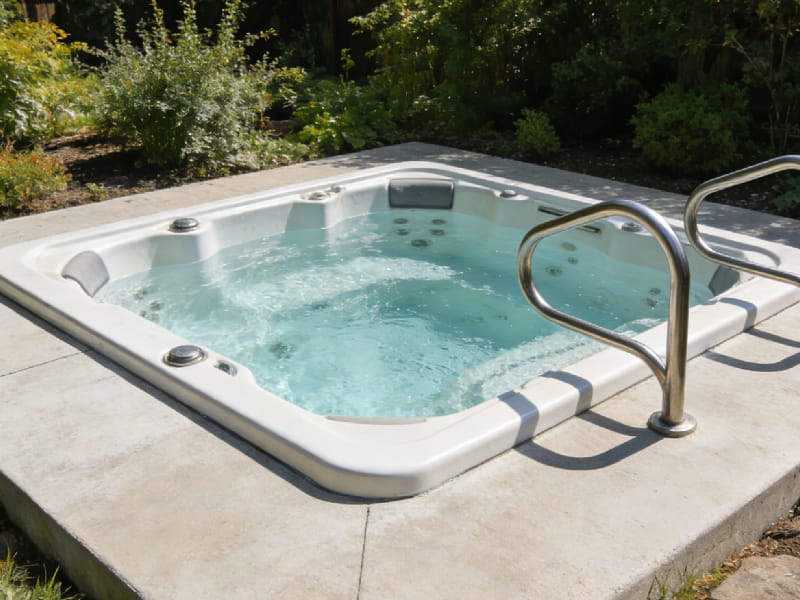
Table of Contents
1.Option 1: Concrete Pads – The Gold Standard for Stability
2.Option 2: Raised Decks – Engineering for Elevated Relaxation
3.Comparison and Foundation Alternatives
Deciding where to place a new hot tub is a critical decision that goes far beyond aesthetics. The primary consideration must always be safety and structural integrity. A typical hot tub, when filled with water and occupied by people, can weigh between 3,000 and 8,000 pounds. This immense weight requires a foundation that is not only level but specifically engineered to handle such a static load without shifting or settling over time. Whether you are considering a ground-level concrete pad or an elevated wooden deck, understanding the specific load-bearing requirements is essential to prevent structural failure and ensure the longevity of your investment.
1.Option 1: Concrete Pads – The Gold Standard for Stability
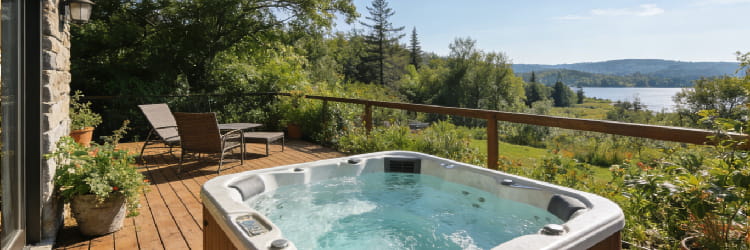
For many homeowners and professionals, a poured concrete pad is the preferred foundation due to its durability and superior weight distribution capabilities.
Thickness and Load-Bearing
The most common question regarding this option is, "hot tub concrete pad thickness." Industry standards generally dictate that a concrete pad must be at least 4 inches thick . While 4 inches is the minimum safety requirement for basic models, many experts recommend a thickness of 4 to 6 inches to accommodate heavier tubs or to ensure a greater safety margin .
Reinforcement and Construction
Thickness alone is not sufficient; the pad must be reinforced. It is highly recommended to use steel rebar or wire mesh within the concrete to prevent cracking and increase tensile strength . The pad should also extend slightly beyond the footprint of the hot tub to provide adequate edge support. Furthermore, the soil underneath the pad must be stable and well-compacted; in areas with loose soil, adding a layer of gravel or using concrete footings can prevent the pad from sinking .
2.Option 2: Raised Decks – Engineering for Elevated Relaxation
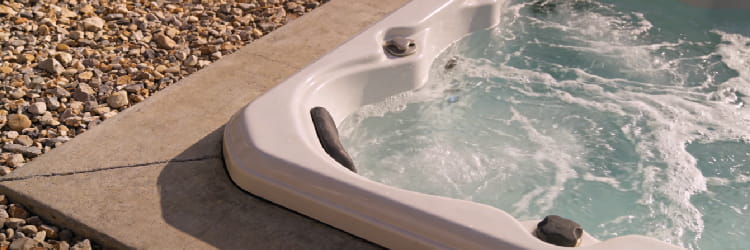
Installing a hot tub on an elevated deck offers a seamless transition from the home but introduces complex structural challenges.
Structural Capacity and Codes
Standard residential decks are typically designed to support a "live load" of 40 to 60 pounds per square foot (psf), which accounts for people and furniture . However, a hot tub imposes a much heavier concentrated load, often requiring a capacity of 100 psf or more in the specific area of the tub . This means that standard deck construction is rarely sufficient without modification.
"Hot Tub on Deck Requirements"
To meet hot tub on deck requirements, several factors must be evaluated:
l Dead Load vs. Live Load: You must calculate the total weight of the tub (dead load) plus the water and occupants (live load) . A 500-gallon tub alone can weigh over 4,000 pounds when filled .
l Professional Assessment: It is strongly advised to consult a structural engineer. Some local building codes actually mandate an engineering review for decks supporting hot tubs .
l Support Modifications: Decks often require additional footings, beams, and joists to handle the weight. Failure to reinforce the structure can lead to catastrophic collapse or gradual warping .
3.Comparison and Foundation Alternatives
When choosing between a concrete pad and a deck, consider the following comparisons:
Feature | Concrete Pad | Raised Deck |
Load Capacity | Excellent; naturally distributes weight evenly. | Variable; requires engineering for high loads (100+ psf). |
Cost | Generally lower; involves pouring a slab. | Higher; requires lumber, hardware, and labor. |
Complexity | Moderate; requires site prep and curing time. | High; requires structural calculations and permits. |
Maintenance | Low; resistant to rot and pests. | Moderate; requires inspection for rot or loose fasteners. |
Spa Foundation Ideas
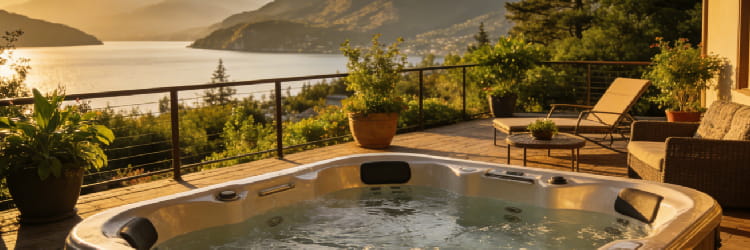
While concrete and decks are the most common, other spa foundation ideas exist for ground-level installations:
l Prefabricated Spa Pads: Made from synthetic materials, these interlocking pads are easy to install and provide excellent drainage .
l Gravel or Crushed Stone: A more budget-friendly option that can work for lighter portable spas, provided a solid, level base is established and a stepping stone or pad is used to support the weight evenly .
The choice between a concrete pad and a deck ultimately depends on your landscape, budget, and the specific structural capabilities of your home’s architecture. A concrete pad offers a straightforward, high-strength solution with standard thickness requirements of 4 to 6 inches. In contrast, a deck installation is a complex structural project that demands rigorous load calculations—often requiring capacities of 100 psf or more—and professional oversight. Regardless of the choice, verifying that your foundation meets these detailed load-bearing requirements is the only way to ensure a safe and relaxing hot tub experience. Always consult local building codes and professionals before beginning construction.