Table of Contents
1.Introduction: The Backyard Dream – A Critical Choice
2.The Initial Investment – Upfront Purchase and Installation Costs
3.The Long Game – Annual Operating and Maintenance Expenses
4.Beyond the Price Tag – Usability and Lifestyle Value
5.The Hidden Cost – A Deep Dive into Property Tax Implications
6.Conclusion: Making the Smartest Investment for Your Home in 2026
1. The Backyard Dream – A Critical Choice
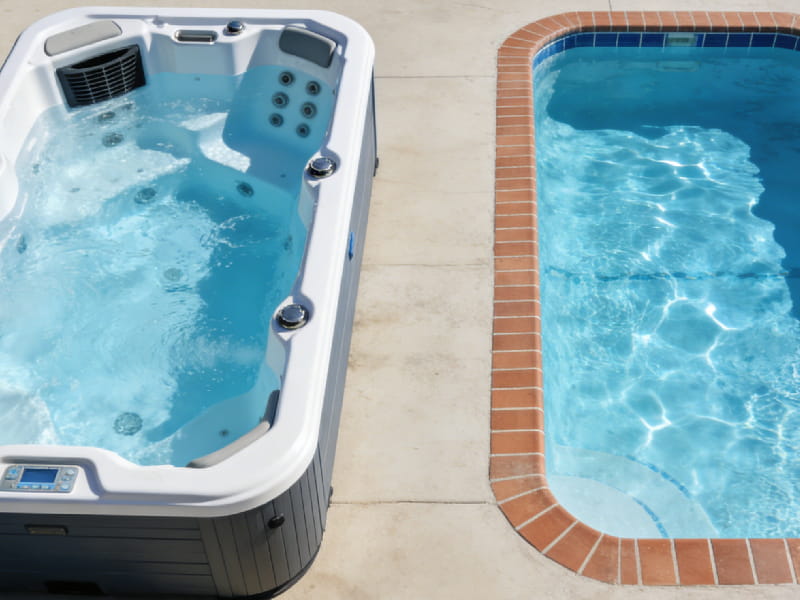
For many homeowners, the ultimate backyard dream centers around a shimmering body of water—a sanctuary to escape the hustle of daily life, stay active, and create lasting memories with family and friends. For decades, the traditional swimming pool stood as the undisputed symbol of this dream. Today, however, a versatile and increasingly popular contender has emerged: the swim spa.
As we navigate 2026, the decision between these two aquatic options has grown more complex than ever, shaped by evolving technology, economic shifts, and a growing emphasis on year-round usability and energy efficiency. Choosing wisely requires looking far beyond the initial purchase price; it demands a thorough analysis of the total cost of ownership—from installation and long-term maintenance to a factor many buyers overlook: property taxes.
This comprehensive report breaks down the essential financial and lifestyle differences between swim spas and traditional pools, helping you determine which aquatic investment best aligns with your budget, space constraints, and personal goals. If you’re weighing the costs and benefits of a swim spa vs. a pool, this guide delivers the detailed insights you need to make an informed decision.
2. The Initial Investment – Upfront Purchase and Installation Costs
The first financial hurdle in bringing your backyard aquatic dream to life is the upfront cost, which includes both the unit itself and complete installation. This is where the most significant initial price gap between a swim spa and a traditional pool becomes apparent.
The Sticker Price: A Clear Difference
Generally, a swim spa represents a more modest initial capital outlay, making it accessible to a wider range of homeowners.
• Swim Spas: In 2025 and 2026, the purchase price for a high-quality swim spa typically ranges from $15,000 to $50,000. The final cost depends heavily on factors like size, swim current power, hydrotherapy features, and overall build quality—with premium models offering advanced filtration systems and customizable jet configurations.
• Traditional Pools: The cost for a traditional in-ground swimming pool starts significantly higher and spans a much wider range. Expect initial costs to begin at $35,000 and easily exceed $100,000 for larger designs, custom features (such as waterfalls or lighting), or premium materials. On average, a swim spa costs $20,000 to $40,000 less than a comparable in-ground pool.
Installation Breakdown: Time, Labor, and Logistics
Beyond the unit price, installation costs and complexity further widen the gap between swim spas and traditional pools. A swim spa’s installation is not only lower in cost but also far simpler and faster.
A swim spa is a self-contained, pre-plumbed unit manufactured in a factory, meaning installation primarily requires three key steps:
1. A solid, level foundation: Typically a reinforced concrete pad, which ensures stability and longevity.
2. Dedicated electrical service: Installed by a qualified electrician to power the spa’s heating, filtration, and jet systems.
3. Delivery access: In some cases, a crane may be needed to place the spa, adding a small fee, but overall site disruption is minimal.
The entire installation process can often be completed in 1–2 days, with total installation costs ranging from $3,000 to $10,000, depending on site preparation, electrical work, and delivery logistics.
A traditional in-ground pool, by contrast, is a major construction project that involves extensive labor and time:
1. Extensive excavation: Heavy machinery is used to dig out a large area of your yard, often disrupting landscaping and existing structures.
2. Framing and plumbing: Steel rebar frameworks are erected, and extensive plumbing lines are laid to support filtration and circulation.
3. Shell construction: Options include concrete (gunite or shotcrete), vinyl liner, or fiberglass shell installation—each with its own cost and timeline.
4. Curing and finishing: The shell must cure (often for weeks) before interior surfaces, tile, or coping are applied.
5. Decking and landscaping: Significant work is required to create a surrounding patio, repair yard damage, and restore or enhance the area around the pool.
This process is far more invasive, time-consuming—often taking 4–12 weeks—and consequently, more expensive. Installation costs are typically built into the pool’s overall price tag, contributing to its higher upfront cost.
Table: Installation Cost and Time Comparison
Feature | Swim Spa | Traditional In-Ground Pool |
Average Unit Cost | $15,000–$50,000+ | $35,000–$100,000+ |
Typical Installation Cost | $3,000–$10,000 | Included in total project cost |
Installation Time | 1–3 days | 4–12 weeks |
Site Disruption | Minimal; confined to foundation area | Major; extensive excavation & yard work |
Key Requirements | Concrete pad, electrical hookup | Major excavation, plumbing, electrical, decking |
2026 Cost Projections: Planning for the Future
While no official industry reports offer precise cost projections for 2026, market trends indicate that prices are unlikely to decrease. General economic factors like inflation— which has impacted construction and material costs across the board—will continue to influence pricing. The cost of raw materials used in both pools (concrete, steel, vinyl) and swim spas (acrylic, fiberglass, mechanical components) remains a significant driver of upfront costs.
Furthermore, the growing popularity of at-home wellness and fitness has boosted demand in the aquatic leisure market, which may put additional upward pressure on prices. Homeowners planning a purchase in 2026 should prudently budget for costs that align with current figures, with the potential for modest increases due to these persistent economic pressures.

3. The Long Game – Annual Operating and Maintenance Expenses
The initial purchase is just the beginning of your financial commitment. Ongoing operating and maintenance costs are where the economic advantages of a swim spa become even more pronounced over time—turning a lower upfront investment into long-term savings.
Energy Consumption: The Power Bill Battle
Heating is the single largest energy expense for any backyard aquatic feature, and the difference in water volume between swim spas and pools is critical here.
• Swim Spas: Hold 1,500 to 2,500 gallons of water—significantly less than a traditional pool. Their smaller surface area, combined with high-quality, lockable insulating covers, dramatically reduces heat loss. As a result, the monthly energy cost to keep a modern, well-insulated swim spa heated and ready for use typically ranges from $50 to $150. Some highly efficient models can even operate for as little as $30–$50 per month.
• Traditional Pools: Hold 10,000 to 30,000+ gallons of water. Heating this massive volume requires a substantial amount of energy. While solar covers can help reduce heat loss, they are far less efficient than the custom-fitted, rigid covers of a swim spa. Consequently, the annual electricity and/or gas costs for a heated pool can easily run into the thousands of dollars—often 3–5 times higher than those for a swim spa.
Water & Chemicals: A Matter of Volume
The cost of water and the chemicals needed to keep it clean and balanced is directly proportional to its volume. With 5 to 10 times less water than a traditional pool, a swim spa requires far fewer chemicals over the course of a year—translating into significant savings and simpler water management. While a pool’s annual chemical costs can range from $500 to $1,000 or more, a swim spa’s chemical costs are typically a fraction of that, averaging $100–$300 per year.
Maintenance & Repairs: Your Time and Money
Maintenance involves both time and money, and a swim spa’s smaller size and advanced filtration systems simplify the process considerably.
• Swim Spa Maintenance: Routine tasks like testing water, adding chemicals, and cleaning filters take significantly less time than pool maintenance. The non-porous acrylic shell is easy to wipe down, and there’s no risk of liner tears or concrete resurfacing. Verified annual maintenance costs range from as low as $500 to $2,500, covering chemicals, filter replacements, and other essential supplies.
• Pool Maintenance: Pools require more labor-intensive care, including skimming a large surface area, vacuuming the entire floor, and backwashing large filter systems. They are also susceptible to more costly long-term repairs, such as vinyl liner replacement ($3,000–$7,000 every 5–10 years) or resurfacing a concrete pool ($10,000+ every 10–15 years). The average annual maintenance cost for a traditional pool—including professional opening/closing services, chemicals, and minor repairs—often falls between $3,000 and $6,000.
Table: 5-Year Total Cost of Ownership Projection
While exact figures vary based on location, usage, and model, this table provides a hypothetical but realistic 5-year comparison based on available industry data.
Cost Category | Swim Spa (Mid-Range) | Traditional Pool (Entry-Level) |
Initial Purchase & Installation | $35,000 | $60,000 |
Annual Energy Costs (Avg. $100/mo) | $1,200 | $3,000 |
Annual Maintenance & Chemicals | $800 | $1,500 |
Subtotal Annual Costs | $2,000 | $4,500 |
Total 5-Year Operating Cost | $10,000 | $22,500 |
Potential Major Repairs (5 Yrs) | Low (Component focus) | Moderate (Liner, pump) |
ESTIMATED 5-YEAR TOTAL | $45,000 | $82,500+ |
This projection clearly illustrates that over a five-year period, a swim spa can cost nearly half as much as a traditional in-ground pool—solidifying its position as a financially compelling choice for budget-conscious homeowners.
4. Beyond the Price Tag – Usability and Lifestyle Value
The best investment isn’t just about the lowest cost; it’s about the value you receive in return. This is where a swim spa’s versatility and practicality truly shine, offering benefits that extend far beyond what a traditional pool can provide.
Year-Round Enjoyment vs. Seasonal Fun
For most of the country, a traditional outdoor pool is a seasonal luxury, usable for only 3–5 months a year (typically summer). A swim spa, however, is designed as an all-season vessel. Its efficient heating system and insulated cover make it just as enjoyable for a morning workout on a crisp autumn day or a relaxing soak on a snowy winter evening. This ability to provide 365 days of use per year dramatically increases its value and return on your lifestyle investment.
Versatility: The Ultimate Swimming Pool Alternative
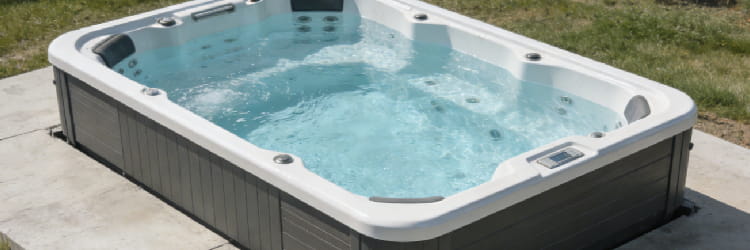
A swim spa is a multi-functional aquatic gym, combining the features of three products into one compact unit:
1. A Treadmill for Swimmers: A powerful current generator allows you to swim in place for a continuous, low-impact workout—regardless of the unit’s length. This is ideal for fitness enthusiasts, triathletes, or anyone looking to stay active without the need for a full-sized lap pool.
2. A Hydrotherapy Spa: Most models feature dedicated seating with powerful massage jets, perfect for post-workout recovery, stress relief, and soothing sore muscles. This therapeutic benefit is a key advantage over traditional pools, which lack built-in massage functionality.
3. A Recreation Area: It serves as a perfect small pool for family fun, relaxation, and teaching children to swim in a controlled, safe environment. While it may not accommodate large parties like a traditional pool, it offers intimate, year-round enjoyment for households of all sizes.
A traditional pool, while excellent for recreation and hosting large gatherings, lacks this built-in therapeutic and targeted fitness functionality. For those seeking a swimming pool alternative that prioritizes health, wellness, and year-round use, a swim spa is the superior choice.
Space Efficiency: Maximizing Your Property
The footprint of a traditional pool can consume a significant portion of a backyard, limiting space for gardening, play areas, or other outdoor activities. A swim spa, with typical dimensions around 8 feet by 15 feet, offers a complete aquatic experience in a fraction of the space. This makes it an ideal solution for homes with smaller lots or for homeowners who wish to preserve green space while still enjoying the benefits of a backyard water feature.
5. The Hidden Cost – A Deep Dive into Property Tax Implications
Perhaps the most overlooked aspect of the swim spa vs. pool cost debate is the long-term impact on your property taxes. This impact is determined by how your local tax assessor classifies your new aquatic addition—and it can add thousands of dollars to your annual expenses over time.
The Core Principle: Permanent Improvements and Property Value
Property taxes are calculated based on the assessed value of your property. When you make a significant, permanent improvement to your home—such as adding a deck, a new room, or an in-ground pool—the assessed value of your property increases. This, in turn, typically leads to a higher annual property tax bill.
The Critical Distinction: Real Property vs. Personal Property
For tax purposes, property is generally divided into two categories:
• Real Property: This includes the land and any structures permanently affixed to it. An in-ground swimming pool, which involves excavation and permanent construction, is almost universally classified as real property. It becomes an integral part of your home and will be included in its assessed value, leading to higher property taxes.
• Personal Property: This includes movable items that are not permanently attached to the property—think furniture, appliances, or a car. Personal property is not typically included in a home’s assessed value, so it does not increase property taxes.
Swim Spas: A Flexible Classification
This is where swim spas offer a potential tax advantage: their classification often depends on the method of installation.
• Above-Ground/Portable Installation: A self-contained swim spa placed on a concrete slab is often classified as personal property, much like a portable hot tub. Because it is not a permanent fixture and could theoretically be moved with the homeowner, many tax jurisdictions do not include it in the property’s assessed value. This means it may not increase your property taxes at all.
• In-Ground/Vaulted Installation: If you choose to fully or partially sink your swim spa into the ground or a deck, it is much more likely to be classified as a permanent improvement (real property), similar to a traditional pool. In this scenario, it would likely increase your property’s assessed value and your tax bill.
A Final Word of Caution
It is absolutely critical to understand that property tax laws and assessment practices vary significantly by state, county, and even city. While the principles outlined above are common, there is no single national standard. The research conducted for this report did not yield a definitive list of how specific states (such as California, Florida, Texas, or New York) classify swim spas—each jurisdiction has its own rules.
Before making a final decision, you should contact your local property tax assessor’s office directly. Inquire how they classify both in-ground pools and above-ground, self-contained swim spas to get a definitive answer on the potential long-term tax implications for your specific location. This step can save you from unexpected tax increases down the line.

6. Making the Smartest Investment for Your Home in 2026
When all factors—upfront costs, long-term expenses, usability, and property taxes—are considered, the choice between a swim spa and a traditional pool becomes clearer.
A traditional in-ground pool remains a viable option for those with a large budget, expansive outdoor space, and a primary desire for a large recreational area for hosting parties and traditional lap swimming. However, it comes with a significantly higher initial cost, more extensive and invasive installation, substantially higher long-term operating and maintenance expenses, and a near-certain increase in property taxes.
A swim spa, on the other hand, emerges as the more financially savvy, versatile, and practical choice for the modern homeowner in 2026. It offers:
• Lower Total Cost of Ownership: A more accessible initial price point is followed by dramatic savings in energy, chemicals, and maintenance year after year—adding up to tens of thousands of dollars in savings over a decade.
• Year-Round, Multi-Purpose Use: It functions as a gym, a spa, and a recreational pool, providing value every day of the year, not just during summer months.
• Space-Saving Design: It delivers a complete aquatic experience without monopolizing your backyard, allowing you to preserve space for other activities.
• Potential Tax Advantages: An above-ground installation may prevent an increase in your annual property tax bill—a significant long-term financial benefit that traditional pools cannot match.
As you plan your backyard transformation, look beyond the initial glamour of a traditional pool and consider the complete picture. For a cost-effective, versatile, and efficient solution that delivers exceptional value for years to come, a swim spa is the definitive swimming pool alternative. We encourage you to contact an aquatic specialist to discuss your specific needs and find the perfect model to fit your home and lifestyle.