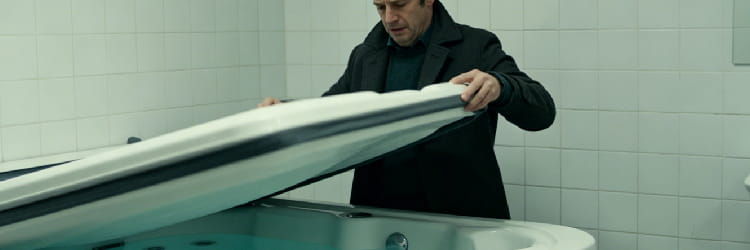
So, you’ve done it. You’ve prepped the snacks, cued up the perfect chill-out playlist, and donned your finest swimwear. You peel back the cover of your beloved hot tub, anticipating a wave of steamy, blissful heat… only to be greeted by the aquatic equivalent of a cold shoulder. The water is stubbornly, disappointingly lukewarm. Or worse, it’s just… water. No heat. Nothing. Your bubbling oasis has become a glorified, tepid puddle.
Before you start dramatically shaking your fist at the sky or considering a career change to become a hot tub whisperer, take a deep breath. A non-heating spa is one of the most common issues owners face, and the culprit is often less sinister than you think. While it might feel like your tub is staging a rebellion, the problem usually boils down to one of three things.
As your friendly neighborhood hot tub content creators, we're here to guide you through the troubleshooting process like a seasoned pro. We’ll start with the laughably simple fixes and work our way up to the slightly more technical stuff. By the end of this guide, you’ll be able to diagnose why your spa is not heating up and, in many cases, fix it yourself.
Blog Directory
1..The Flow Fiasco – Is Your Water Even Moving?
2.The Grumpy Gatekeeper – Diagnosing the Hot Tub Flow Switch
3.Heart Failure – Investigating the Heating Element
4.Conclusion: Know When to Throw in the Towel (and Call a Pro)
1.The Flow Fiasco – Is Your Water Even Moving?
Before we start dissecting your spa's internal organs, let's cover the basics. Your hot tub’s heater is a brilliant but cautious piece of technology. It has one non-negotiable rule: it will not turn on if water isn't flowing through it at a sufficient rate.
Think of it like a high-tech toaster that refuses to heat up unless it detects a slice of bread inside. Heating up without water flowing over it would cause the element to overheat and burn out in seconds—a phenomenon known as "dry firing" . To prevent this expensive self-destruction, your spa has sensors that ensure a healthy flow of water. If that flow is restricted, the heater stays off, and you get an error message or just… cold water.
So, the first question to answer when your hot tub heater is not working is: "Is my water flow weak?" Two prime suspects are usually to blame.
The Clogged Filter Conspiracy
Your hot tub filter is the unsung hero of your spa, tirelessly trapping lotions, oils, hair, and other gunk. But even heroes have their limits. A filter that's clogged with debris is like trying to drink a thick milkshake through a coffee stirrer—not much is getting through. This drastically reduces water flow, triggering the safety sensors to shut down the heater .
How to Investigate:
1.Power Down: For safety, turn off the power to your hot tub at the breaker.
2.Locate and Remove: Find your filter canister, open it, and remove the filter cartridge(s). They’ll likely look a bit grim.
3.The "No-Filter" Test: With the filter still out, close the canister, turn the power back on, and run your tub. If the heater kicks in and the dreaded "FLO" or "FL" error code on your display disappears, you've found your villain !
4.The Solution: You need to either give that filter the deep clean of its life or, if it's more than a year old or looks worn out, replace it. A clean filter is the cheapest insurance you can buy for a happy heater.
The Low Water Level Letdown
This one is so simple it's almost embarrassing, but it happens to the best of us. If the water level in your spa drops too low, the circulation pump can start sucking in air along with water. This creates air pockets in the plumbing (an "air lock") and severely disrupts the water flow . The sensors detect this chaos, and—you guessed it—shut the heater down to protect it.
How to Investigate:
1.Eyeball It: Look at the side of your tub. The water level should always be above the highest jet and well over the filter intake.
2.Top It Up: If it's low, grab the hose and fill it to the recommended level.
3.Cycle the Jets: Turn the jets on and off a few times to help purge any trapped air from the lines. You might see some bubbles burp out of the jets, which is a good sign.
If your heater roars back to life after cleaning a filter or topping up the water, congratulations! You just saved yourself a service call with about 15 minutes of work. If not, it's time to dig a little deeper.

2.The Grumpy Gatekeeper – Diagnosing the Hot Tub Flow Switch
If your filters are clean and your water level is perfect, but your control panel is still flashing a flow error ("FLO," "FL," "FLC") or the heater simply refuses to engage, you may have an issue with the gatekeeper of the heating system: the hot tub flow switch or pressure switch.
What in the World is a Flow Switch?
A hot tub flow switch is a small but critical safety sensor. Its entire job is to physically detect that water is moving through the pipes before it allows the control board to send power to the heater . Think of it as the bouncer at Club Heater. If it doesn't see a steady line of water molecules moving past, the door stays shut, and the party doesn't start.
These switches can fail in two ways:
l Stuck Open: The switch is broken or stuck in the "no flow" position, even when water is flowing just fine. It’s lying to the spa's brain, telling it there’s no flow when there actually is.
l Stuck Closed: The switch is stuck in the "flow is good" position, even when the pumps are off. Most modern spas are smart enough to recognize this is impossible and will still prevent the heater from turning on as a safety precaution.
These components can get gummed up with scale or debris, their internal parts can wear out, or the electrical connection can become loose .
Step-by-Step: How to Tell if Your Flow Switch is on Strike
This part requires opening up the equipment bay of your spa. If you're not comfortable with this, skip ahead to the conclusion. If you're ready to play detective, let's go.
**⚠️ SAFETY FIRST: This is non-negotiable. Before you open the access panel, turn off the power to your hot tub at the main circuit breaker. You are working near electrical components and water. Do not take any chances .
1.Locate the Switch: Open the equipment access panel. The flow switch is typically located on the plumbing assembly connected directly to the heater tube. It will have a wire or two coming out of it. Some look like a small T-fitting with a threaded cap, while others are small rectangular sensors.
2.Visual Inspection: Look for any obvious signs of trouble. Is the wire disconnected or corroded? Is there water leaking from the switch? Does the switch itself look cracked or damaged? Sometimes the fix is as simple as reconnecting a loose wire.
3.The Gentle Tap: With the pumps running (you'll have to temporarily turn the power back on for this, but do not touch anything inside), use the handle of a screwdriver to give the flow switch a few gentle taps. If the switch is just a little sticky, this can sometimes be enough to free it up. If the error code vanishes and the heat kicks on, you've found the issue. This is often a temporary fix, however, and signals the switch is on its way out.
4.The Bypass Test (For Advanced DIYers Only): This is the definitive test, but it requires caution. Its purpose is to diagnose the problem, not to be a permanent solution.
l Power Off Again: Shut off the power at the breaker.
l Access the Connection: Carefully unplug the flow switch's wire connector from the main circuit board. It will typically be a small two-pin connector.
l Create a Jumper: Use a small piece of wire (or a bent paperclip) to briefly connect the two pins on the circuit board where the switch was plugged in . This is "jumping" the switch, essentially tricking the circuit board into thinking the switch is reporting good flow.
l Test Briefly: Turn the power back on. DO NOT LEAVE THE JUMPER IN PLACE FOR MORE THAN A FEW SECONDS. Watch the control panel. If the flow error disappears and you hear the "click" of the heater relay engaging, you have 100% confirmed that your flow switch is faulty and needs to be replaced .
l Power Down and Remove: Immediately turn the power off at the breaker and remove your jumper wire.
If the bypass test proves the switch is the problem, you can order a replacement part and install it. If the heater still doesn't work even when bypassed, then the grumpy gatekeeper isn't the problem, and we must move on to the heart of the operation itself.
3.Heart Failure – Investigating the Heating Element
We've checked the water flow and cleared the gatekeeper. If your spa is still not heating up, it's time to investigate the component that does the actual work: the heating element. The element is the heart of your spa's warmth, a powerful resistor that glows hot to heat the water as it passes by .
And just like a heart, it can fail. The most common causes of element failure are:
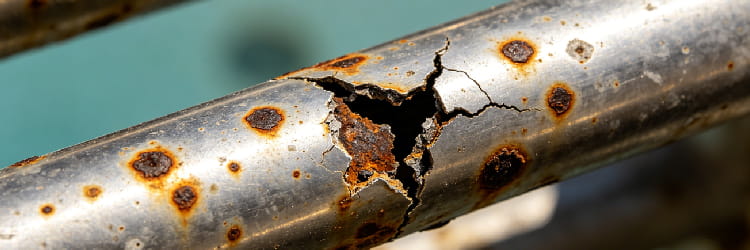
l Corrosion: Poor water chemistry, especially consistently low pH (acidic water), will literally eat the element alive .
l Scale Buildup: In areas with hard water, calcium and other minerals can build up on the element, forming a crust. This acts as an insulator, forcing the element to work much harder to heat the water until it eventually overheats and fails .
l Old Age: Heating elements don't last forever. After thousands of heating cycles, they can simply burn out .
The Ultimate Test: Using a Multimeter to Get Answers
Diagnosing a heating element requires a tool called a multimeter. If you don't have one or are unfamiliar with its use, this is where we strongly recommend calling a professional. For the confident DIYer, this test will give you a definitive answer.
**⚡️ EXTREME DANGER WARNING: We cannot stress this enough. TURN OFF THE POWER AT THE MAIN BREAKER. You will be touching the direct electrical connections of a high-voltage component. A mistake here can be fatal. Double-check that the power is off before proceeding .
1.Access the Heater: Open the spa's control box (the "spa pack"). You will see the heater element housed inside a stainless steel tube. It will have two large terminals (posts) with nuts securing thick wires to them.
2.Visual Inspection: Before you test, just look. Do you see any obvious signs of failure? Is the element blistered, cracked, or visibly broken? Is there heavy, chalky scale buildup? Sometimes the problem is plain to see.
3.Disconnect the Element: Using a nut driver or wrench, carefully remove the two nuts and disconnect the wires from the heating element's terminals. Make sure they aren't touching anything else.
4.The Resistance (Ohms) Test:
l Set your multimeter to the resistance setting (Ω). The 200 Ω range is usually best.
l Touch one probe to one of the element's terminals and the other probe to the other terminal .
l A good element will give you a reading somewhere between 9 and 12 ohms. The exact number varies, but it should be a low, stable number.
l A bad, "open" element will give you a reading of "OL" (Open Loop), "I" (Infinity), or just a blank screen. This means the filament inside is broken, and electricity cannot pass through. The element is dead .
l A bad, "shorted" element will give a reading of or very near zero. This is rare but indicates the element is shorted out.
5.The Ground Fault Test:
l Keep the multimeter on the resistance setting.
l Touch one probe to one of the terminals, and the other probe to the metal heater tube itself.
l Repeat for the other terminal.
l In both cases, you should get a reading of "OL" or infinity. This means no electricity is leaking from the element to the water. If you get any numerical resistance reading, the element has a ground fault. This is a dangerous condition that should be tripping your GFCI breaker, and the element must be replaced immediately.
If these tests reveal a faulty element, the only solution is a replacement.

4.Know When to Throw in the Towel (and Call a Pro)
Let’s recap. When your hot tub heater goes on strike, you are now armed with a three-step action plan:
1.Check for a Flow Fiasco: First, inspect the easiest culprits. Are your filters clean? Is the water level high enough? This solves a surprising number of heating problems.
2.Investigate the Grumpy Gatekeeper: If flow seems fine, the hot tub flow switch is your next suspect. A visual check, a gentle tap, or a careful bypass test can tell you if this safety sensor is the reason your hot tub heater is not working.
3.Perform Heart Surgery: Finally, if all else fails, a multimeter test on the heating element itself will give you the final verdict on whether the heart of your spa's heating system has given up the ghost.
The journey from a cold tub to a warm oasis can be a rewarding DIY project. However, it's crucial to know your limits. If you're not comfortable with wiring, if you don't own a multimeter, or if the thought of opening the control box fills you with dread, there is no shame in calling for backup.
A certified spa technician can diagnose and fix these issues safely and efficiently. Your safety is always more important than saving a few bucks.
Now, go forth and troubleshoot! Your warm, bubbly paradise is waiting.