Table of Contents
1.Introduction: The Foundation of Your Relaxation
2.The Paver Predicament: Understanding the Weight and Risks
3.The Long-Term Challenge: Settling, Leveling, and Maintenance
4.A Comparative Analysis of Hot Tub Base Options
5.Conclusion: Building Your Oasis on Solid Ground
1.Introduction: The Foundation of Your Relaxation
You've made the exciting decision to bring a hot tub into your life. You’re already picturing the warm, bubbling water, the soothing jets, and the serene evenings spent under the stars. But before you can achieve this backyard bliss, there's a crucial, practical question that every prospective owner must face: Where will you put it? Specifically, what will it sit on?
For homeowners with an existing patio or those who love the aesthetic appeal of interlocking stones, the question frequently becomes: "Can you put a hot tub on paving stones?" The short answer is, "Yes, but with significant considerations." While pavers offer a visually appealing solution, placing an object weighing several thousand pounds on them is not as simple as it sounds. An improper foundation can lead to a cascade of problems, from uneven water levels to catastrophic damage to the hot tub’s shell, potentially voiding your warranty .
This comprehensive guide will serve as your expert research report on the topic. We will delve into the critical factors of weight distribution, the science behind a proper paver installation, the long-term challenges of settling and leveling, and how pavers stack up against alternative hot tub base options like concrete slabs, gravel beds, and prefabricated pads. Our goal is to provide you with the objective, in-depth information you need to build your oasis on a foundation that is as solid and reliable as the relaxation you seek.
2.The Paver Predicament: Understanding the Weight and Risks
Placing a hot tub on pavers is an appealing idea, often because a paver patio already exists or is part of a larger landscaping vision. However, the success of this approach hinges entirely on whether the paver base was designed from the outset to support a massive, static load.
The Critical Question: Can Pavers Handle the Load?
Let's start with the numbers. A moderately sized hot tub can hold 300-400 gallons of water. Water weighs approximately 8.34 pounds per gallon, meaning just the water alone can account for 2,500 to 3,300 pounds. Add the dry weight of the tub itself (500-1,000 pounds) and a few occupants (another 600-800 pounds), and you are easily looking at a total weight of 4,000 to 5,000 pounds (approximately 2.5 tons) or more .
This immense weight must be distributed perfectly evenly across the entire base of the hot tub. If the surface is not completely flat and uniform, certain points on the hot tub's structure will bear more weight than they were designed for. On a standard paver patio, which is made of dozens or hundreds of individual stones, this concentrated load can cause individual pavers to shift, crack, or sink . This not only creates an unstable surface but also puts extreme stress on the hot tub’s acrylic shell, which can lead to fractures and leaks—damage that is rarely covered by warranty .
Beneath the Surface: The Non-Negotiable Sub-Base
The single most important factor in using pavers for a hot tub base isn't the pavers themselves—it's what lies beneath them. A standard patio designed for foot traffic is almost certainly not adequate. A robust, properly prepared sub-base is required to provide the necessary support and prevent long-term settling.
An appropriate sub-base for a hot tub involves a multi-layer system:
1.Excavation: The process begins by excavating the site to a depth of 10 to 12 inches. This removes the soft topsoil and organic material that will compress and shift over time.
2.Compacted Gravel Layer: The excavated area is then filled with a 6- to 8-inch layer of crushed stone or gravel . This material must be added in 2- to 3-inch increments, with each layer being thoroughly compacted using a mechanical plate compactor. This dense, interlocking layer provides the primary load-bearing strength and is crucial for drainage, preventing water from pooling under the base and causing issues from frost heave in colder climates .
3.Sand Bedding Layer: On top of the compacted gravel, a 1-inch layer of coarse sand is spread and screeded to be perfectly level . This sand layer is not for structural support; its purpose is to provide a smooth, level bed in which to set the individual pavers.
Without this deep, compacted foundation, the weight of the hot tub will inevitably cause the pavers to sink and become uneven, initiating the structural risks discussed earlier.
Choosing the Right Pavers: Thickness and Material Matter
Not all pavers are created equal. If you are constructing a new paver base or evaluating an existing one, the type and thickness of the pavers are critical.
l Thickness: For a hot tub application, the pavers should be robust. A minimum thickness of 2.36 inches (60mm) is often recommended for residential driveways and should be considered the absolute minimum for a hot tub pad. Many experts would even suggest pavers that are 3 inches thick or more for added security and load distribution . Thinner, purely decorative patio stones are not suitable.
l Material and Strength: The pavers should be made from high-density concrete or another strong, durable material designed for high load-bearing capacity . Check the manufacturer's specifications for compressive strength.
l Interlocking Mechanism: After laying the pavers, the joints should be filled with polymeric sand. When activated with water, this sand hardens and locks the pavers together, helping them act as a single, unified surface rather than as individual stones. This enhances stability and helps distribute the load more effectively.
3.The Long-Term Challenge: Settling, Leveling, and Maintenance
Even with a perfectly executed installation, a paver base is not a "set it and forget it" solution. Its modular nature makes it inherently more susceptible to the forces of time and nature than a monolithic concrete slab.
Why a Perfectly Level Surface is Paramount
The requirement for a level foundation cannot be overstated. Manufacturers are clear in their installation manuals: the hot tub must be placed on a flat, level surface . Here’s why it matters so much:
l Structural Integrity: As mentioned, an unlevel surface creates uneven stress points on the hot tub's shell and frame. Over months and years, this constant, uneven pressure can cause the acrylic to develop micro-cracks that eventually grow into leaks. This is the single most compelling reason to ensure your base is perfect.
l Water Level and Skimming: On an unlevel pad, the water will be higher on one side of the tub than the other. This can submerge some jets while leaving others too high, affecting performance. More importantly, it can render the surface skimmer ineffective if the water level drops below its operating range on one side, leading to poor water quality.
l Component Function: Hot tub equipment, including pumps and heaters, is designed to operate on a level plane. While a slight deviation may not cause immediate failure, it can contribute to premature wear on motor bearings and other moving parts over time.
The Inevitable Shift: How Ground Settling Affects Pavers
The primary long-term risk for a paver hot tub base is settling. Unlike a solid slab of concrete that may sink uniformly (or crack), a paver surface is prone to differential settling, where one area sinks more than another .
Several factors contribute to this:
l Sub-Base Compaction: If the gravel sub-base was not adequately compacted during installation, it will continue to compact under the immense, constant weight of the hot tub, leading to sinking.
l Water Erosion: Poor drainage around the patio can allow water to wash away the sand bedding layer from beneath the pavers, creating voids and causing them to sink or wobble .
l Freeze-Thaw Cycles: In colder climates, any moisture trapped in the sub-base will expand when it freezes, pushing the pavers upward (frost heave). When it thaws, the ground settles back down, but often not uniformly. This repeated seasonal movement can wreak havoc on a level surface over several years .
A slight dip that would be unnoticeable on a walkway can be a critical failure point when it's under a 5,000-pound hot tub.
Remediation: The Difficult Task of Fixing a Sunken Base
So, what happens when you notice your hot tub is no longer level? With a paver base, the fix is unfortunately laborious and expensive.
1.Drain the Hot Tub: The first step is to completely drain the unit.
2.Disconnect and Move the Hot Tub: The tub must be disconnected from its electrical supply and physically moved off the paver base. This is a non-trivial task requiring several strong people or specialized equipment.
3.Identify and Correct the Issue: Once the base is exposed, you must lift the sunken pavers, add and level more bedding sand to bring the area back to grade, and then replace the pavers. If the issue is with the gravel sub-base, the repair is even more extensive.
4.Replace the Hot Tub: Finally, the hot tub must be moved back into position, leveled, reconnected, and refilled.
This process is disruptive, costly, and highlights the major maintenance drawback of choosing pavers. While using shims to level a hot tub is sometimes discussed, it is a poor solution for a paver base . Shims can create new pressure points and will not address the root cause of the sinking, which will likely continue to worsen .
4.A Comparative Analysis of Hot Tub Base Options
To make an informed decision, it's essential to compare a hot tub on pavers with other popular hot tub base options. Each has a unique profile of cost, stability, ease of installation, and aesthetics.
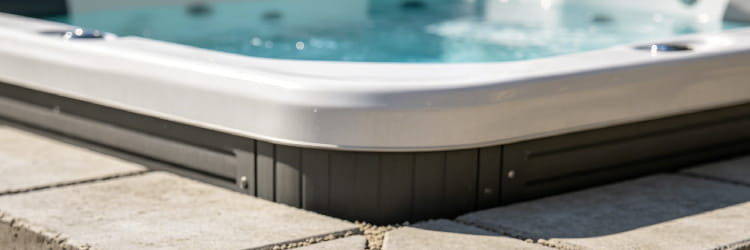
Paving Stones: The Aesthetic Choice
l Pros: Unmatched aesthetic appeal and design flexibility, allowing the hot tub base to integrate seamlessly with the surrounding landscape . Good drainage through the joints.
l Cons: Requires an extensive, expertly prepared sub-base to be viable. Highly susceptible to settling and shifting over time. Repairs are difficult and require moving the hot tub. Higher long-term maintenance risk.
Concrete Slabs: The Gold Standard
l Pros: The most stable, durable, and permanent solution available. Provides a perfectly flat, solid surface that will not shift or settle if installed correctly . It is the foundation recommended by most hot tub manufacturers.
l Cons: Typically the most expensive option, especially if professional installation is required. Installation is labor-intensive and permanent—it cannot be easily moved or removed. It can be susceptible to cracking over time if not properly poured with reinforcement .
Contained Gravel Beds
l Pros: Excellent drainage, relatively inexpensive, and one of the easiest DIY options . The gravel is easy to level and re-level if needed. The base is permeable, which is good for managing water.
l Cons: Requires a solid frame (e.g., from treated lumber) to contain the gravel. Some may find the aesthetic less refined. There is a small risk of individual stones shifting directly under the tub, though this is minimal if pea gravel is used and well-compacted.
Prefabricated Pads: The Quick and Easy Solution
Often marketed under various brand names, these modular, interlocking plastic pads are designed as an alternative to traditional bases. This category covers the search for an ez pad for hot tub.
l Pros: Extremely fast and easy to install, often in less than an hour. Lightweight, portable (ideal for renters or if you plan to move the tub), and generally the most cost-effective option upfront .
l Cons: They are only as level and stable as the ground beneath them. You still must prepare a perfectly level area of soil or sand for the pad to sit on. They are generally considered less durable for the very long term compared to concrete and may not provide the same sense of permanence or stability.
Comparison Table: Choosing Your Ideal Foundation
Feature | Paving Stones | Concrete Slab | Contained Gravel Bed | Prefabricated Pad |
Long-Term Stability | Moderate to Low | Very High | High | Moderate |
Durability | Moderate | Very High | High | Moderate to Low |
Upfront Cost | High (if professionally installed) | Very High | Low | Low to Moderate |
Installation Ease (DIY) | Difficult | Very Difficult | Easy | Very Easy |
Maintenance Risk | High (Settling) | Low (Cracking) | Very Low | Low |
Aesthetics | Very High | Utilitarian | Moderate | Low |
Best For... | Homeowners prioritizing aesthetics and willing to invest heavily in sub-base preparation and accept maintenance risk. | Homeowners seeking the ultimate "set it and forget it" solution and longevity. | DIYers and budget-conscious buyers who want a stable, functional, and forgiving base. | Renters, temporary setups, or those needing the fastest, simplest installation on a tight budget. |
5.Building Your Oasis on Solid Ground
So, can you put a hot tub on paving stones? Yes, you can. But as we've explored, the more important question is, should you?
The answer depends on your tolerance for risk, your budget, and your commitment to a meticulous installation process. A hot tub on pavers can be a beautiful and functional choice, but only if it rests on an exceptionally well-prepared, deep, and compacted sub-base. Without this critical underpinning, you are setting the stage for future problems with settling and leveling that are difficult and expensive to fix.
When evaluating your hot tub base options, consider the long-term implications:
l For ultimate stability and peace of mind, a reinforced concrete slab remains the undisputed gold standard . It is a significant upfront investment, but one that virtually guarantees a lifetime of trouble-free support for your hot tub.
l For a balance of performance, cost, and ease, a contained gravel base is an outstanding and often underrated choice. It provides excellent drainage and stability and is far more forgiving than pavers.
l For speed and portability, a prefabricated pad is a viable solution, provided the ground beneath it is prepared to be perfectly level.
l Paving stones are best reserved for those who prioritize aesthetics above all else and are willing to invest the significant time and money into a "no-compromises" sub-base, while also accepting the potential need for future maintenance.
Your new hot tub is a major investment in your home and your well-being. By choosing a foundation that is solid, stable, and level, you ensure that your investment is protected and that your backyard oasis will provide relaxation, not remediation, for many years to come. Before you break ground, carefully assess your site, your budget, and your long-term goals, and build your dream on solid ground.