
Table of Contents
1.Empty Hot Tub Weight: A Realistic Breakdown
2.Pre-Move Preparation: Drain, Disconnect, and Plan
3.How to Move a Hot Tub Yourself: Equipment and Techniques
4.Safety Hazards and When to Call the Pros
A hot tub is a welcome addition to any backyard, but moving one—even when empty—is no small feat. Before you recruit friends or rent a truck, the first question that comes to mind is: “How heavy is an empty hot tub?” The answer directly influences your moving strategy, the equipment you need, and whether a DIY move is feasible. This guide provides a clear, data-backed look at empty hot tub weight, the proper tools required (including the all‑important hot tub dolly), and step‑by‑step advice on how to move a hot tub yourself—while staying safe and avoiding costly damage. Whether you’re a DIY‑minded buyer or just want to understand the logistics, you’ll find the practical information you need.
1.Empty Hot Tub Weight: A Realistic Breakdown
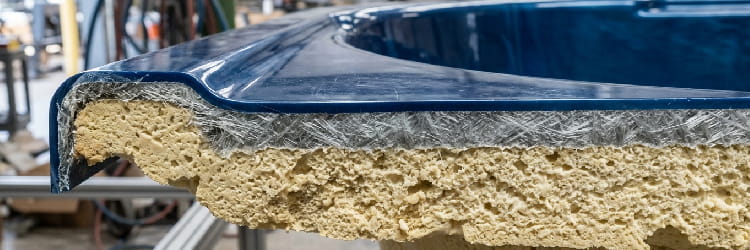
Residential hot tubs are deceptively heavy. Even without water, the combination of a thick acrylic or rotomolded shell, a sturdy wooden or metal frame, pumps, heaters, and insulation adds up quickly. Most empty hot tubs fall within a weight range of 500 to 1,200 pounds (225 to 545 kg) , though larger models with multiple pumps and extra features can tip the scales at up to 1,500 lbs (680 kg) . The exact weight depends on three main factors: size, construction material, and included equipment.
By Size:
l Small / 2‑person tubs: Typically weigh between 400 and 600 lbs (180‑270 kg). Compact and often used as plug‑and‑play models, they are the most manageable for a DIY move if you have a few helpers.
l Medium / 4‑5 person tubs: Usually range from 600 to 900 lbs (270‑410 kg). These are the most common backyard sizes and require serious planning and at least a heavy‑duty furniture dolly.
l Large / 6‑person or more: Often weigh 800 to 1,200 lbs (365‑545 kg) and can exceed 1,500 lbs for high‑end models with advanced hydrotherapy jets and sound systems . At this size, professional moving assistance becomes strongly advisable.
Material Matters
Entry‑level rotomolded (rotationally molded) polyethylene shells are often lighter than hand‑crafted acrylic tubs, which contain multiple layers of fiberglass reinforcement. A cabinet base made of synthetic materials also saves weight compared to natural cedar or redwood. Insulation density and the number of pumps (especially in dual‑ or triple‑pump configurations) can add 50–100 lbs .
A key takeaway: even the “light” end of the spectrum is far heavier than a large refrigerator. Underestimating the weight is the most common mistake homeowners make.

2.Pre-Move Preparation: Drain, Disconnect, and Plan
Successfully moving a hot tub yourself starts long before you ever lift it. Safety must be the priority, and thorough preparation reduces risks of injury and property damage.
Draining the Tub
Start by cutting power. Unplug the unit or shut off the dedicated breaker in your main electrical panel to eliminate shock hazards . Allow the water to cool completely if the tub has been recently used. Once safe, follow these steps:
1.Locate the drain valve—typically on the side or bottom of the cabinet .
2.Attach a garden hose to the drain spout and run it to a suitable runoff area. Never discharge chemically treated water directly onto lawns or into storm drains; consult local regulations regarding disposal . Many municipalities require chlorine‑neutralized water to be discharged only into the sanitary sewer system.
3.Open the valve fully. Expect a few hundred gallons to take 30–60 minutes to empty. Use a wet‑dry vacuum to remove residual water from the footwell and plumbing lines after draining .
Disconnecting
After draining, clean and dry the shell thoroughly. Remove the power cord and store it in a waterproof bag to prevent moisture damage during transport . Do not use the plumbing or jets as handles—this can crack internal lines. If the tub is hardwired, hire a licensed electrician to disconnect it safely.
Route Planning and Measurement
Measure every doorway, gate, hallway, and stairway the tub must pass through. Standard interior doorways are 30–36 inches wide, but a hot tub’s width or height often exceeds that. In many cases, the tub must be moved on its side using a purpose‑built appliance dolly. Check for overhead obstructions like low‑hanging tree limbs, eaves, or light fixtures. Create a clear, obstacle‑free path and protect floors with plywood sheets or thick moving blankets.
3.How to Move a Hot Tub Yourself: Equipment and Techniques
A successful DIY hot tub move hinges on having the right gear. Here are the essentials, with an emphasis on the hot tub dolly and related tools.
Recommended Equipment
l Heavy‑duty furniture dolly (hot tub dolly): Choose a flat‑bed dolly with a load rating that exceeds your tub’s weight by at least 20%. For an 800‑lb tub, a dolly rated for 1,000‑1,200 lbs is essential. Look for a steel‑framed model with thick rubber pads to protect the shell and 3‑ to 4‑inch swivel casters that roll smoothly over grass, gravel, or pavement . Some dollies are rated up to 1,500 lbs static load and can handle a large hot tub shell .
l Moving straps / lifting harness: Two‑person lifting straps distribute weight and reduce back strain. When combined with a dolly, they help lift the tub up onto the platform without bending at the waist.
l Plywood sheets and PVC pipes: For rough terrain or when a dolly cannot be used, lay down plywood tracks and roll the tub slowly over 2‑inch PVC pipes—a classic Egyptian‑style method that works surprisingly well for short distances.
l Appliance dolly / hand truck with strap: If the tub must be tilted and rolled vertically through narrow gates or onto a trailer, this is the tool of choice. Ensure it has a high back and is rated for at least 1,000 lbs.
Moving Step by Step
1.With at least four strong helpers, carefully tilt the tub onto its side and slide the furniture dolly underneath. Secure it with ratchet straps so it cannot shift.
2.Roll the loaded dolly slowly, with one person on each side to steady the load. Avoid sudden stops or changes of direction.
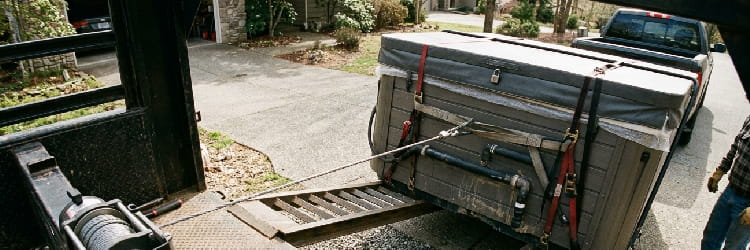
3.When loading onto a trailer, use reinforced loading ramps rated for the combined weight. Winching the tub up the ramp is far safer than pushing from behind.
4.Once at the new location, lower the tub onto a prepared, level foundation and fine‑tune with composite shims or a hot tub leveling platform if necessary .
4.Safety Hazards and When to Call the Pros
Moving an empty hot tub yourself can save money, but it isn’t for everyone. Falls, crush injuries, and back strain are the most common consequences of poor execution . Here are the top hazards to avoid:
l Lifting by the plumbing: Never use pipes or jet housings as grab points. They will break under load.
l Inadequate dolly capacity: Using a dolly rated for only 500 lbs on a 700‑lb tub invites sudden collapse and injury.
l Solo lift attempts: Even a small 400‑lb tub cannot be safely handled by one person; at least two people are required, and four is the realistic minimum for medium‑to‑large tubs.
l Unbalanced loads on stairs: If stairs are unavoidable, use a stair‑climbing dolly operated by someone with experience. Never carry a tub up or down steps by hand.
The Professional Threshold
As weight increases, the risk‑to‑reward ratio tips decisively toward hiring movers. Based on industry experience, once a hot tub exceeds 800–1,000 lbs empty, professional moving is strongly recommended. Even if you feel physically capable, the specialized training and insurance a pro team offers protect against cracked shells, damaged property, and serious personal injury. If your tub requires a crane to lift over a fence or house, only a professional crew should be involved. Budget for a pro move if you have any doubts about your team’s strength, the pathway, or the necessary equipment—it’s almost always less expensive than a hospital bill or a new tub.
Understanding how much an empty hot tub weighs is the first step toward a safe, successful relocation. With weights ranging from 400 to over 1,200 lbs, these spa units demand respect and proper planning. By draining and disconnecting correctly, measuring your route, and equipping yourself with a heavy‑duty hot tub dolly and moving straps, a DIY move is within reach for smaller and mid‑sized tubs. However, for larger units or complicated pathways, calling in professional movers is the smart choice. Whether you move it yourself or hire out, prioritizing safety for people and property ensures that your hot tub’s next chapter is one of relaxation, not regret.