Table of Contents
1.Introduction: The Allure of the Bubbling Oasis
2.What Exactly Is a Hot Tub? Beyond the Basic Definition
3.The Core Components: The Anatomy of a Modern Hot Tub
4.The Symphony of Systems: How a Hot Tub Heats and Circulates Water
5.The Art of the Massage: How Hot Tub Jets Work
6.A Fundamental Choice: Portable vs. In-Ground Spas
7.Conclusion: Your Journey to Relaxation Starts with Understanding
1.The Allure of the Bubbling Oasis
Imagine sinking into perfectly heated water as thousands of therapeutic bubbles melt away the day's stress. This is the universally understood appeal of a hot tub. For many, it’s a symbol of relaxation, luxury, and therapeutic relief. But have you ever paused mid-soak and wondered, "How does this actually work?" While the experience is one of simple bliss, the technology powering it is a fascinating and sophisticated interplay of mechanics, hydrodynamics, and electronics.
If you're new to the world of spas, the terminology can seem daunting. This article serves as your comprehensive introduction. We will demystify the magic behind the bubbles, providing a clear hot tub definition and explaining exactly how a hot tub works. From the components humming away inside the cabinet to the intricate design of the massage jets, this guide is the ultimate resource for any hot tub for beginners.
2.What Exactly Is a Hot Tub? Beyond the Basic Definition
At its most basic, a hot tub is a large tub or small pool full of heated water used for hydrotherapy or recreation. It is equipped with powerful jets that mix air and water to create a massaging effect on the user's body. However, a modern hot tub is much more than just a tub of hot water. It's a self-contained, closed-loop aquatic ecosystem designed for optimal comfort, cleanliness, and energy efficiency.
The core purpose of a hot tub is to deliver hydrotherapy—the use of water to relieve discomfort and promote physical well-being. This is achieved through three key elements:
l Heat: Warm water helps to widen blood vessels, increasing blood flow to sore or damaged tissues and allowing oxygen and nutrients to help overworked muscles recover faster.
l Buoyancy: The water supports your body weight, reducing stress on joints and muscles, which creates a feeling of weightlessness and deep relaxation.
l Massage: The jets provide a therapeutic massage that can ease muscle tension, alleviate pain, and reduce stress.
Understanding these principles is the first step in appreciating the engineering that makes the experience possible.

3.The Core Components: The Anatomy of a Modern Hot Tub
To truly understand how a hot tub works, we must first dissect its anatomy. Think of a hot tub as a living system, with each component playing a vital, interconnected role. These components are typically housed out of sight between the inner acrylic shell and the outer cabinet .
The Shell and Cabinet: The Body and Skeleton
l The Shell: This is the waterproof, molded interior of the hot tub that holds the water and occupants. Modern shells are typically made from durable, multi-layered acrylic, which is smooth, comfortable, and resistant to stains and chemical damage. The ergonomic design of the seating and the strategic placement of jets are all integrated into the shell.
l The Cabinet: This is the exterior housing of the hot tub. It protects the internal plumbing and electrical components from the elements while also providing an aesthetic finish. Cabinets are made from materials ranging from natural wood to modern, weather-resistant synthetic composites.
The Pump(s): The Heart of the System
The pump is arguably the most critical component, often described as the "heart" of the hot tub . Its primary job is to circulate water throughout the spa's plumbing. It draws water in from the tub, pushes it through the filter and heater, and then forces it back out through the jets .
Most modern hot tubs feature at least one two-speed pump:
l Low Speed: This speed is used for general circulation, filtration, and heating. It runs quietly and efficiently for several hours a day (as programmed via the control panel) to ensure the water is constantly being cleaned and kept at the desired temperature .
l High Speed: When you’re ready for a massage, you activate the high speed. This dramatically increases the flow rate and pressure of the water being forced through the jets, creating a powerful hydrotherapeutic experience .
In a testament to modern efficiency, many high-quality pumps are designed to transfer the waste heat generated by their own motors back into the water, helping to reduce heating costs .
The Heater: The Engine of Warmth
The hot tub heater explained simply is the component that warms the water to your desired soaking temperature, typically between 100°F and 104°F (38°C to 40°C). As water is circulated by the pump, it passes through the heater assembly . The most common type is an electric heater, which functions much like a home water heater. It contains a heating element—often made of titanium or stainless steel for longevity—that heats up as electricity passes through it, transferring that thermal energy to the water flowing past it .
While electric is most common, other heating methods exist, including natural gas, propane, and even solar-powered systems . For safety, every heater is equipped with crucial mechanisms like temperature sensors and high-limit switches that automatically shut the heater off if the water temperature exceeds a safe level, preventing overheating .
The Filtration System: The Unsung Hero of Clarity
While jets and heaters get most of the attention, the filtration system is essential for a safe and enjoyable experience. The system's primary function is to capture and remove physical debris like leaves, hair, oils, and other particles that enter the water .
The process is straightforward: as the pump circulates water, it pulls it through one or more filter cartridges. These cartridges are made of a pleated polyester material that traps fine particles. It’s important to note that the filtration system does more than just remove visible debris; it also works in conjunction with your sanitizing chemicals (like chlorine or bromine) to help eliminate unseen bacteria and keep the water pristine .
The Control System: The Brain of the Operation
If the pump is the heart, the control system (also known as the spa pack) is the brain . This electronic unit is the central hub that coordinates all of the hot tub's functions. It consists of a sealed box containing the circuit board and a user-facing topside control panel.
From the control panel, you can:
l Set and adjust the water temperature.
l Turn the pumps on and off and switch between speeds.
l Control the lighting.
l Program filtration and heating cycles.
l Activate special features like air blowers or waterfalls.
The control system acts as the central command, ensuring all components work together seamlessly to deliver the experience you desire .
Insulation: The Key to Efficiency
An often-overlooked but critical component is the insulation. A hot tub is essentially a large container of hot water, and without proper insulation, that heat would quickly escape into the surrounding air, leading to exorbitant energy bills. High-quality hot tubs use full-foam insulation, where the entire space between the shell and the cabinet is filled with dense, expanding foam. This not only provides an exceptional thermal barrier to retain heat but also adds structural support to the plumbing, reducing vibrations and noise. A well-fitted, insulated cover is also a crucial part of this system, preventing heat and water from escaping from the surface.

4.The Symphony of Systems: How a Hot Tub Heats and Circulates Water
Now that we know the players, let's see how they work together. The process of how a hot tub circulates water and keeps it hot is a continuous, automated loop.
Here is the step-by-step process for a standard filtration and heating cycle:
1.Suction: The pump activates on its low-speed setting. It begins to draw water from the main body of the tub through suction fittings and the skimmer (which removes surface debris).
2.Filtration: The drawn water is immediately directed through the filtration system. The pleated cartridges trap impurities, cleansing the water before it moves to the next stage .
3.Heating: After passing through the filter, the now-clean water flows into the heater assembly. The heater’s internal sensor reads the water’s temperature. If it's below the set point you programmed on your control panel, the heating element activates and warms the water as it passes through .
4.Return: The clean, heated water is then pushed through the rest of the plumbing and gently returned to the tub through various outlets, which may include some of the jets (even when they aren't on full power).
This entire cycle runs automatically for several hours each day, ensuring your hot tub is always clean, warm, and ready for you to use. When you decide to turn on the jets for a massage, you're simply telling the control system to switch the pump to high speed, dramatically increasing the volume and velocity of water rushing through this same fundamental loop.

5.The Art of the Massage: How Hot Tub Jets Work
The jets are the defining feature of the hot tub experience. But how hot tub jets work is a clever piece of fluid dynamics. It isn't just about squirting water; it's about creating a powerful, therapeutic stream.
The Science Behind the Sensation: Hydro-Jets vs. Aero-Jets
Most of the massage action comes from hydro-jets. The magic behind their power lies in the Venturi effect. As the pump forces a high-pressure stream of water through the narrow opening of the jet nozzle, the velocity of the water increases, creating a vacuum. This vacuum sucks in air through a separate air intake line. The air mixes with the water stream inside the jet body just before it exits the nozzle, creating a turbulent, bubble-filled stream that feels much more powerful and encompassing than water alone . You can often control the intensity of this effect by adjusting an air control valve on the top of the hot tub, which opens or closes the air intake lines.
Some hot tubs also feature aero-jets, or air jets. These systems use a separate component called a blower, which injects thousands of tiny, warm air bubbles directly into the water, creating a gentle, effervescent, full-body sensation that is different from the targeted pressure of hydro-jets .
A Tour of Jet Types
Hot tub design has evolved to offer a wide variety of jet types, each engineered to provide a unique massage sensation targeting different parts of the body.
l Directional Jets: These are the simplest type, providing a steady, focused stream of water. They are often adjustable, allowing you to aim the stream precisely at a sore muscle, like in your lower back or feet .
l Rotating Jets: These jets have an internal mechanism that causes the nozzle to spin, creating a circular, kneading massage pattern. This is excellent for covering a broader area like the shoulders or the large muscles of the back .
l Pulsating Jets: These jets are designed to rhythmically interrupt the water flow, creating a pulsing or tapping sensation. This mimics the deep-tissue massage technique of a masseuse and is highly effective for breaking up muscle knots .
l Multi-Massage Jets: These are large jet clusters that often contain multiple nozzles within a single fitting. Some versions oscillate side-to-side or up-and-down, delivering a sweeping "waving" massage across the entire back.
l Whirlpool Jets: Typically larger and more powerful, these jets are designed to move a massive volume of water to create a swirling whirlpool effect in the tub for general relaxation and powerful deep-tissue action.
The combination, placement, and quantity of these jets are what differentiate the hydrotherapy experience from one model to another.
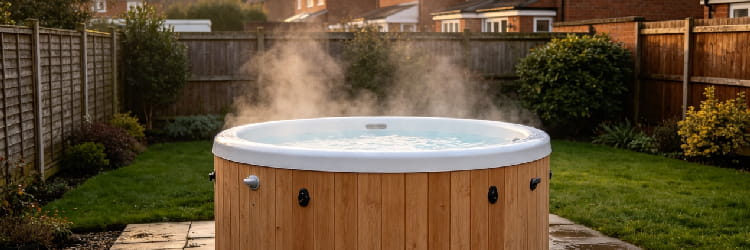
6.A Fundamental Choice: Portable vs. In-Ground Spas
For anyone considering a hot tub, one of the first questions is whether to choose a portable or an in-ground model. While both offer heated, jetted water, they are vastly different in terms of installation, functionality, and cost. Understanding this is a key part of our hot tub introduction.
The table below outlines the primary differences:
Feature | Portable Hot Tub | In-Ground Hot Tub |
Installation | Self-contained unit with all equipment built-in. Placed on a solid, level surface (like a concrete pad or reinforced deck). Installation can take just a few hours. | Permanent structure requiring extensive excavation, plumbing, and electrical work. Installation is complex, takes several weeks, and requires professional contractors. |
Mobility | Can be moved. If you sell your home, you can take the hot tub with you. | A permanent fixture tied to the property. Cannot be moved once installed. |
Cost | Significantly lower upfront cost. Price includes the tub and all necessary operating equipment. | Significantly higher upfront cost due to custom construction, labor, materials, and landscaping. |
Customization | Limited to the manufacturer's available models, sizes, and colors. | Nearly limitless customization in terms of size, shape, depth, and finishing materials (tile, stone, etc.). Can be integrated seamlessly into pool and landscape designs. |
Functionality | Seats 2-8 people. Advanced jetting and ergonomic seating are key design features. Excellent hydrotherapy performance in high-end models. | Can be built to accommodate more people. Often has more powerful pumps and a larger water volume, but jet placement may be less ergonomic unless custom designed. |
Energy Efficiency | Generally more energy-efficient due to factory-installed full-foam insulation and a tight-fitting, high-quality cover. | Typically less energy-efficient due to larger surface area and water volume. However, the surrounding ground provides some natural insulation. |
Maintenance | Easier to maintain. All components are easily accessible by removing cabinet panels. Smaller water volume requires fewer chemicals. | More complex maintenance. Equipment is often housed in a separate pump room, and the larger water volume requires more attention and chemicals. |
Lifespan | Approximately 10-20+ years, depending on quality and maintenance. | 20+ years; the structure is permanent, though components like pumps and heaters will need periodic replacement. |
In short, portable hot tubs offer convenience, advanced therapeutic features, and energy efficiency in a self-contained, affordable package. In-ground hot tubs offer unparalleled aesthetic customization and permanence, creating a true backyard centerpiece at a higher cost and complexity.
7.Your Journey to Relaxation Starts with Understanding
A hot tub is far more than a simple luxury; it's a sophisticated piece of engineering designed for a single purpose: to enhance your well-being. We've explored the hot tub basics, from the fundamental hot tub explained as a vessel of heated, jetted water, to the intricate dance of its core components.
You now understand that the pump is the tireless heart, the heater is the powerful engine, the filter is the silent guardian, and the control system is the intelligent brain. You know that the mesmerizing massage of the jets is a product of the Venturi effect, and you can distinguish between the different types of hydrotherapy they offer.
By grasping the fundamental concepts of how these systems circulate, heat, and clean the water, you are no longer just a passive user but an informed owner (or future owner). This knowledge empowers you to make better decisions, maintain your investment properly, and ultimately, get the most out of every single soak. Your journey to relaxation truly begins with understanding the remarkable machine that makes it all possible.