Article Contents:
1.Wind Shelter and Orientation
1. Wind Shelter and Orientation
Wind exposure is arguably the most underrated factor in hot tub placement, especially in the UK where strong south-westerly winds are common throughout the year. A tub positioned in an exposed, windy spot will lose heat dramatically faster, driving up your energy bills and making winter soaks far less enjoyable. Studies suggest that wind-exposed hot tubs can consume 30 to 50 percent more energy than those in sheltered positions, simply because the wind strips heat from the water surface and the tub's exterior.
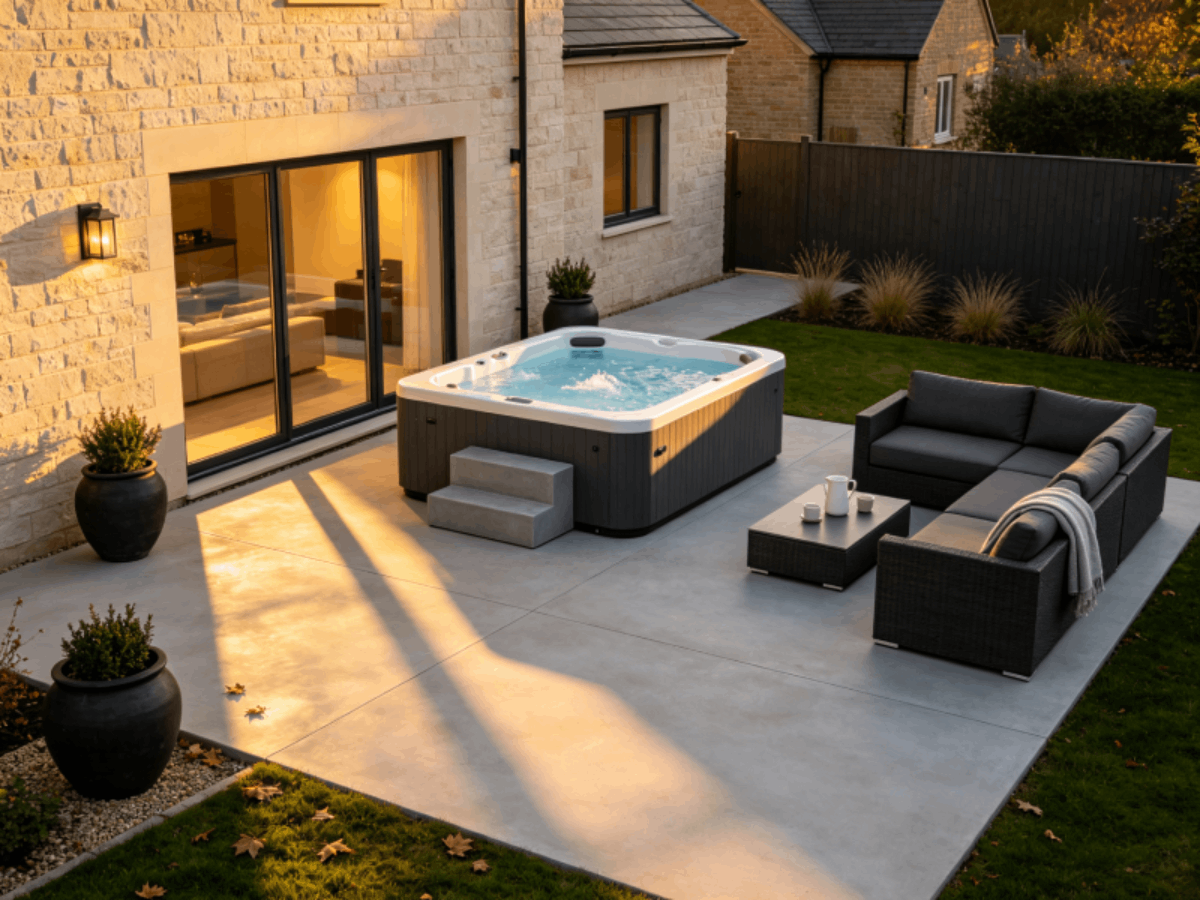
The ideal location is on the leeward side of your house, meaning the side that's protected from the prevailing wind. If your home doesn't offer natural shelter, consider positioning the tub near a tall fence, a garden wall, or a dense evergreen hedge. These barriers don't need to be enormous—even a 1.8-metre fence can significantly reduce wind speed at ground level. Just be careful not to completely enclose the tub, as some airflow is important for ventilation and to prevent moisture buildup around the cabinet. A quality insulated cover is your first line of defence against heat loss
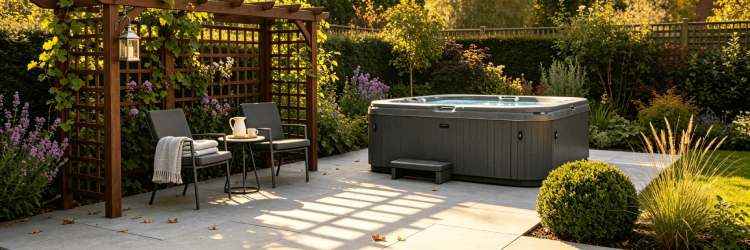
Orientation also matters for sunlight. While you don't need direct sun for the tub to function, a spot that gets some afternoon sun can naturally warm the water and make the area more pleasant to use. However, avoid positions that get scorching midday sun in summer, as this can cause the water to overheat and accelerate chemical degradation. A balance of morning or late-afternoon sun with some shade is ideal.
2. Ground and Foundation
A typical hot tub, when filled with water and occupants, can weigh anywhere from 1,000 to 2,500 kilograms. That's roughly the weight of a small car. This means the ground beneath your tub must be perfectly level and capable of supporting that weight evenly. An uneven base will not only make seating uncomfortable but can also stress the tub's shell and frame, leading to cracks, leaks, and premature wear. In extreme cases, a tub that sinks into soft ground can tilt enough to cause water to spill over the edge, creating a slipping hazard and potentially damaging the surrounding area.
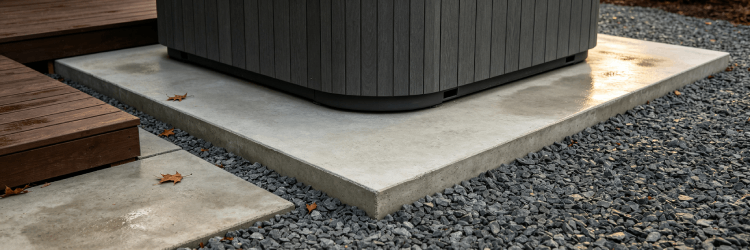
The gold standard for a hot tub base is a reinforced concrete slab, approximately 100 millimetres thick, poured over a compacted sub-base of hardcore or MOT Type 1. This provides a completely flat, stable, and long-lasting foundation that will never shift or sink. If concrete isn't feasible—perhaps because you're renting, or the garden is on a slope—reinforced composite decking can work, but you must have the deck's load-bearing capacity verified by a structural engineer. Standard domestic decking is rarely strong enough for a full hot tub, and adding one without proper reinforcement can lead to catastrophic deck failure. Read our complete shopping guide for more installation advice
Other options include paving slabs laid on a solid mortar bed, or interlocking rubber matting designed specifically for hot tubs. What you should absolutely avoid is placing the tub directly on grass, bare soil, or gravel. Grass will die beneath the tub, creating a muddy, damp environment that promotes rot and mould. Gravel can shift and settle unevenly over time, and neither option provides the stability your tub needs. Whatever base you choose, make sure there's adequate drainage around the tub so that rainwater and splashed water don't pool beneath it.
3. Power and Utilities
Every hot tub needs a reliable electrical supply, and in the UK this means a dedicated outdoor circuit installed by a qualified electrician. Most standard hot tubs require a 16-amp or 32-amp dedicated supply, depending on the model's pump configuration and heating system. The circuit must be protected by a Residual Current Device (RCD) and all outdoor sockets and connections must meet IP65 or higher waterproof ratings. Under no circumstances should you run an extension cable from an indoor socket to power your hot tub—this is a serious fire and electrocution risk, and it will almost certainly void your warranty.
When choosing a location, aim to position the tub within five to ten metres of your consumer unit (fuse box) or an existing outdoor weatherproof junction box. Longer cable runs result in voltage drop, which can cause the tub's heater and pumps to underperform or fail prematurely. Your electrician will be able to calculate the correct cable gauge based on the distance and the tub's power requirements. It's also worth considering where the tub's control panel and equipment compartment will be located—you'll need easy access to these for maintenance and filter changes, so don't push the tub right up against a wall or fence on that side. Learn about our energy-efficient insulation systems that keep running costs low
Water access is another consideration, though it's less critical than power. You'll need to fill the tub with a garden hose, and you'll occasionally need to top it up due to evaporation. An outdoor tap within hose-reach of the tub makes this much easier. For drainage, most hot tubs have a drain valve that you can connect a hose to, so make sure there's a suitable drainage point nearby—either a garden drain, a soakaway, or an area of the garden that can handle the volume of water without causing flooding. Never drain hot tub water directly into a surface water drain without checking local regulations, as the chemicals in the water can be harmful to wildlife.

4. Access and Privacy
Imagine stepping out of your back door on a cold January evening, wearing nothing but a dressing gown and slippers, and having to walk thirty metres across a dark, wet garden to reach your hot tub. It's not an appealing prospect, and it's one of the most common reasons people end up using their tub less than they expected. The ideal location is close enough to the house that you can reach it in ten to fifteen steps, but far enough that the noise from the pumps and bubbling water doesn't disturb people inside the house—particularly if the tub will be used late at night and there are bedrooms nearby.
Privacy is equally important. Even if you're not particularly modest, soaking in a hot tub feels far more relaxing when you're not visible to neighbours or passers-by. Consider the sightlines from neighbouring windows, especially upstairs windows, and from any public footpaths or roads that border your garden. Natural screening from hedges, trees, or trellis with climbing plants is often the most attractive solution, but you can also use privacy screens, gazebos, or pergolas. Just remember that any structure over a certain height may require planning permission, and if you're in a conservation area or own a listed building, the rules are stricter. Browse our range of accessories including steps, covers, and spa care products
Practical access for maintenance is often overlooked. You'll need space around at least one side of the tub—preferably the side with the equipment panel—to open it up for servicing, filter changes, and repairs. A gap of at least 50 centimetres is usually sufficient, but check your specific model's manual for recommendations. You should also consider where you'll store towels, robes, and chemicals. A small weatherproof storage box nearby, or a shelf in a nearby outbuilding, makes the whole experience much more convenient. If you're planning to add features like a towel rail, a drinks table, or a changing screen, factor those into your space planning from the start.
5. Trees and Vegetation
At first glance, positioning your hot tub beneath a large tree might seem idyllic—dappled shade, natural privacy, a sense of being surrounded by nature. But in practice, trees and hot tubs are a problematic combination. Deciduous trees shed enormous quantities of leaves in autumn, and even a small number of leaves finding their way into your tub can overwhelm the filtration system, create a breeding ground for bacteria and algae, and leave you with a constant cleaning chore. Pine trees and other evergreens drop needles and sap year-round, which can be even harder to remove from the water and the tub's surface.
Tree roots are another serious concern. Species like willow, poplar, and sycamore have aggressive, wide-spreading root systems that can grow beneath your tub's base, causing it to crack or heave over time. Even if the roots don't reach the slab itself, they can disrupt drainage and create subsidence in the surrounding ground. As a general rule, position your hot tub at least two to three metres away from the canopy edge of any large tree, and further if the tree is known for invasive roots. If you're unsure about a particular tree, consult a tree surgeon or arboriculturist before committing to a location. Discover our advanced water care systems that make maintenance effortless
This doesn't mean your tub has to sit in a barren, plant-free corner. In fact, carefully chosen planting can greatly enhance the area. Low-growing shrubs, ornamental grasses, and potted plants can create a lush, tropical feel without the leaf-drop problem. Bamboo is a popular choice for screening, but make sure to plant it in a contained barrier or use a non-invasive variety, as some types of bamboo can spread aggressively through a garden. Avoid plants that produce lots of pollen or nectar near the tub, as these will attract bees and wasps, which can be a nuisance—and a danger if anyone using the tub has allergies. Fruit trees are also best avoided, as fallen fruit will attract wasps and create a sticky mess.
6. UK-Specific Considerations
The UK's unique climate and regulatory environment add a few extra layers to your location decision. Planning permission is generally not required for a freestanding hot tub in a domestic garden, but there are exceptions. If the tub is to be installed within the curtilage of a listed building, in a conservation area, or in an area of outstanding natural beauty, you should check with your local council's planning department before proceeding. Similarly, if you're planning to add a permanent structure like a gazebo, a pergola, or a fence over two metres high to enclose the tub, that may require permission. It's always better to ask first than to have to dismantle something later.
Weather is, of course, the great British variable. The UK sees an average of 150 to 200 rainy days per year, and winter temperatures regularly drop below freezing. This makes good drainage around the tub absolutely essential—standing water that freezes can create dangerous slipping hazards and may damage the tub's base or surrounding paving. Wind, as discussed earlier, is a major factor in heat loss, and the UK's prevailing south-westerly winds can be particularly strong in exposed coastal and upland areas. If you live in a particularly windy location, you may want to invest in a windbreak or a purpose-built tub shelter. Read our guide to year-round spa maintenance in the UK climate
Finally, consider your neighbours. Hot tubs are generally not loud, but the pumps do produce a low hum, and the sound of bubbling water can carry on a quiet night. If your tub is positioned close to a neighbour's bedroom window, particularly on the side of the house where they sleep, this could lead to complaints and friction. A quick, friendly conversation with your neighbours before you install the tub can go a long way—let them know what you're planning, where it will go, and that you'll be mindful of noise levels, especially late at night. This simple courtesy can prevent disputes and maintain good neighbourly relations for years to come.
Find Your Perfect Spot and Start Soaking
The best hot tub location in a UK garden balances shelter from the wind, a solid and level foundation, convenient access to power and water, privacy from neighbours, and safe distance from trees and vegetation. It's not about finding the single perfect spot—most gardens have several viable locations—but about weighing these factors and choosing the one that best fits your space, your lifestyle, and your budget. Taking the time to get this right before you install your tub will pay dividends in years of comfortable, low-maintenance, and genuinely relaxing soaks.
Remember that every garden is different, and what works perfectly for one property may not be suitable for another. If you're unsure about any aspect—whether it's the load-bearing capacity of your deck, the electrical requirements, or the planning rules in your area—consult a qualified professional before you begin. And if you're still deciding which hot tub is right for your space, our team is here to help. Get a personalised quote today or explore our Modern Collection of compact and mid-sized hot tubs, perfect for UK gardens of all sizes.